THE FILMMAKER
TOM SIVELL
MIDLANDS, ENGLAND
So, once I’d started putting this load-out together, it dawned on me that my mates have been right all these years… I am, in fact, incredibly boring.
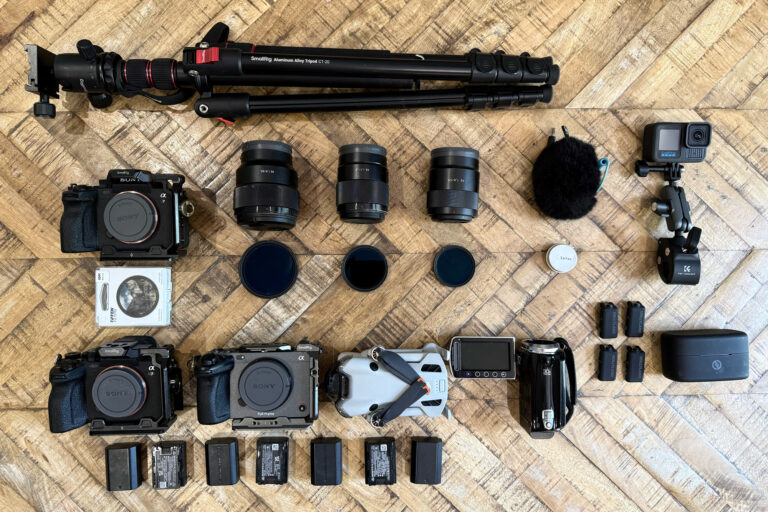
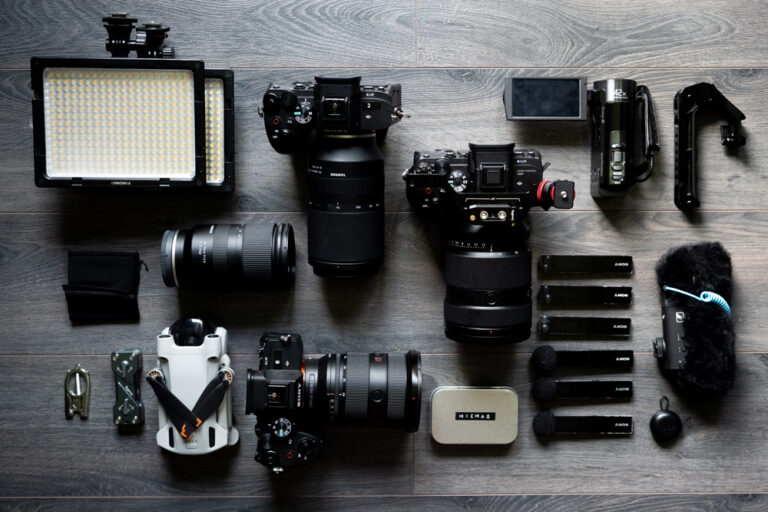
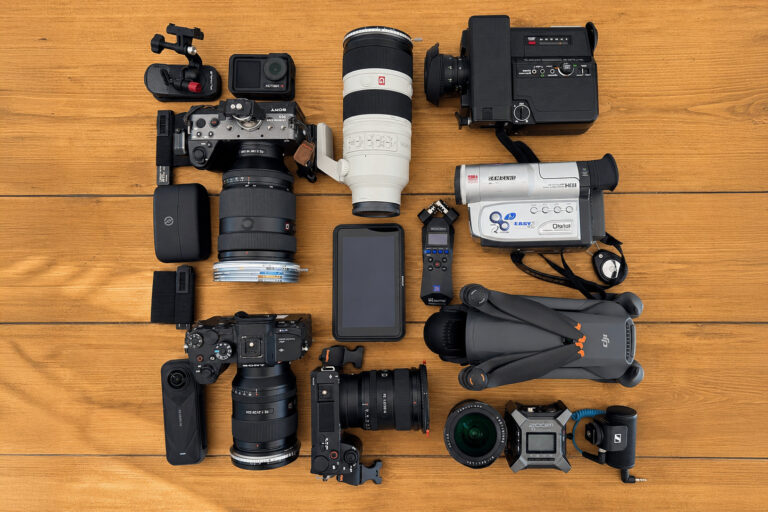
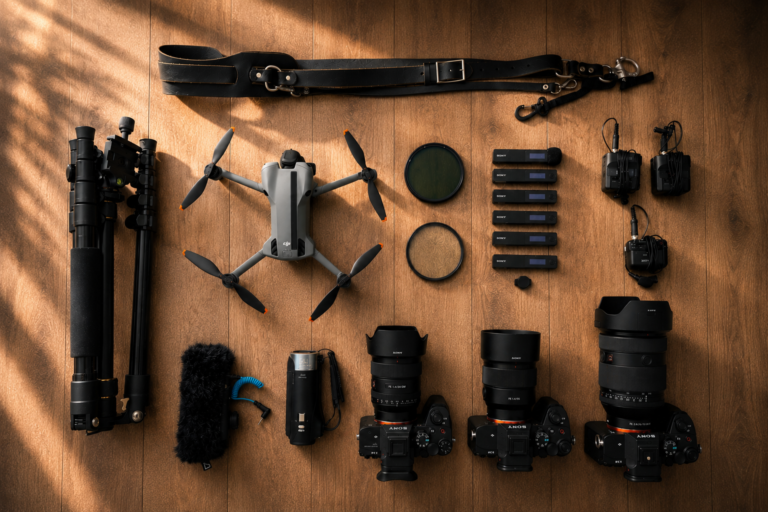
There’s nothing particularly fancy about my setup or my approach to filming weddings. I’m a firm believer in the “if it isn’t broken, don’t fix it” mindset, and that’s exactly what my kit is built around. I don’t really chase trends or the latest shiny bit of gear. I just want equipment that disappears into the background and lets me concentrate on documenting the day.
I’ve always shot on Sony. I’ve used other camera brands and, for all I know, there might be a better system out there for me. But Sony has always been incredibly reliable, and I’ve genuinely never felt the need to move away from it.
Getting married myself in 2018 had a massive impact on how I approach weddings. I knew I didn’t want to spend the day being dragged from pillar to post or put into awkward, unnatural poses. At the same time, I also understood that my photographer and videographer needed me to trust them and be open-minded enough to help them document the day properly.
That’s something I’ve carried into my own work. I’ll never ask a couple to do something I wouldn’t have been comfortable doing myself, but every now and then a tiny bit of creative direction can help tell their story. Outside of that, I revert to my incredibly boring self and simply document what’s happening in front of me rather than trying to force or manufacture moments.
Does that mean my work doesn’t always sit in the coolest-most on brand corners of the internet? Probably. But I’d much rather make a film that a couple wants to watch over and over again in twenty years than something that looks incredible on Instagram for a week before ageing like milk.
My setup is built around reliability first and creativity second. Would I love to spend all day shooting vintage Russian lenses, chasing tiny pockets of beautiful light and making everything look impossibly cinematic? Absolutely. But I always remind myself that I’ve been hired to document a couple’s wedding, not to make something that’s all style and no substance.
If I want to experiment with new gear or techniques, I’ll do it on my own time—months, sometimes years, before it ever finds its way into a wedding. Maybe that’s boring. But if someone handed me my wedding film and it was full of gorgeous, artistic shots while somehow missing the moments that actually mattered, I’d have been absolutely gutted…
That’s why my kit is the way it is.
A-CAM + B-CAM
SONY FX3
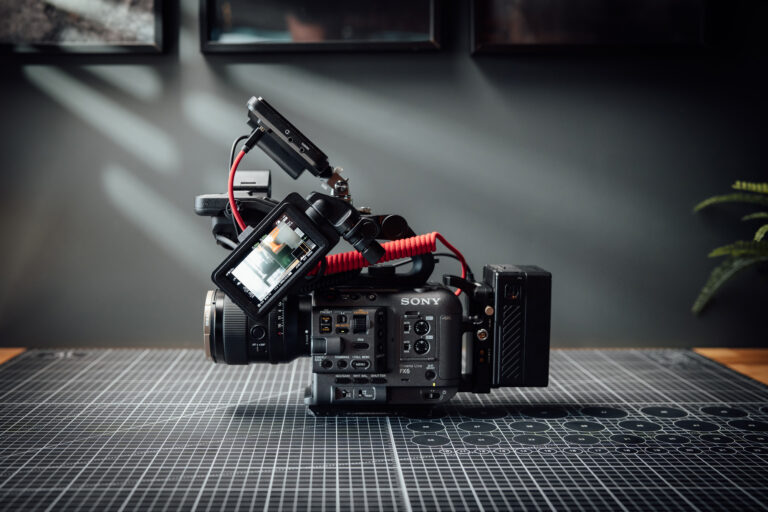
I’ve been shooting on the Sony FX3 since it was released, having moved over from the Sony A7 III, and I’ve never looked back. True to form, this camera has never let me down (unless I’ve been the one to cause the problem), and without question it’s the best camera I’ve ever used.
The dual base ISOs completely changed the way I shoot. The autofocus is rock solid, I love working in S-Log, it’s the perfect size, and, quite frankly, I’d happily be buried with one.
Would I love internal NDs? Absolutely. There are a couple of things I’d change if I could, but every minor gripe I’ve had has been solved by adding a few bits to my rig rather than changing the camera altogether.
C-CAM
SONY A7IV
Calling this my C camera almost feels disrespectful because there’s a very real world where this could be my A camera for weddings.
It generally lives on a tripod covering ceremonies, speeches and any other moments where I need something dependable that can happily roll for hours. The 4K image at 25fps is incredibly sharp and matches beautifully with the FX3s.
LENSES
SONY 24-70 F2.8 GM II
I have a real soft spot for prime lenses, but, going back to me being incredibly boring, I’m not looking to take unnecessary risks on a couple’s wedding day.
The 24–70mm G Master is about as safe and dependable as it gets. It’s ridiculously versatile, incredibly sharp and has rescued me more times than I care to admit. Absolute banger of a lens.
SONY 85 f/1.4 G
Now this thing is special. It’s definitely flawed, and I’ll be the first to admit it, which is why I rely so heavily on the 24–70mm. But when this lens is on form… chef’s kiss.
The autofocus can be frustratingly slow at times, but the look you get at f/1.4 is worth every bit of patience. Shooting drinks receptions with this lens never gets old.
SONY 135 f/1.8 G
This is the lens I wish I could justify using more, but unless I fancy spending the whole wedding stood in the car park, it’s not always practical.
It gets used heavily during ceremonies and speeches, and I’ll always find an excuse to grab a few candid family shots during drinks reception. The compression at 135mm combined with f/1.8 is just unreal. I’d quite happily have this one buried with me as well.
AUDIO
Tascam DR-10L
QTY:4 – CEREMONY & SPEECHES AUDIO
Audio is one area where I refuse to compromise. I know visible lav mics aren’t ideal, and I always apologise to the photographer when I need to mic people up, but good audio matters far more to me than perfectly clean lapels.
As much as I appreciate the simplicity of something like the Sony TX, I still trust the Tascams more for my main recordings. Not being able to monitor them is always slightly nerve-racking, and there’s definitely that split second when someone hands one back and your heart skips a beat wondering if it actually recorded…
Thankfully, they’ve never let me down. (I’ve probably just cursed myself.)
SONY TX660
Pretty much every wedding videographer owns one of these. Is the audio a little tinny? Absolutely. Does it look like a vape? Also yes. Could the build quality be better? Probably.
Has it rescued me more times than I can remember? Without question.
These get used whenever there’s a handheld microphone involved. I also keep a little Amazon sleeve that lets me strap one onto a mic as a backup recorder or use it where a traditional lav simply won’t work. Brilliant little bit of kit.
accessories
DJI RONIN RS4
My second FX3 spends most of its life on the Ronin. While I don’t think you need a gimbal to tell the story of a wedding day, I really appreciate having the option, especially when I’m working alongside a second shooter. Having one of us handheld and the other on a gimbal gives us plenty of flexibility throughout the day.
Atomos Shinobi II
If I had to criticise the FX3, it’d be the rear screen.
There genuinely aren’t enough swear words in the English language to explain how much I dislike Sony’s monitors.
Adding the Shinobi II to my rig in 2025 completely changed the experience of shooting. Any wedding where I can’t use it, I notice immediately.
SmallRig V-Mount Batteries
These are probably the least exciting items in my kit, but also some of the most important.
Two batteries comfortably get me through an entire wedding day, and I honestly can’t remember the last time I worried about battery life. A very boring purchase but an incredibly worthwhile one.
Handheld Rig
My FX3, V-mount, monitor, microphone and everything else live on a handheld rig that’s probably older than God’s dog. I genuinely have no idea what brand it is. I bought it from Amazon years ago, bolted a pair of 5-inch rails onto it for the V-mount, and it’s been going strong ever since.
Much like me, it’s a bit rough around the edges, isn’t particularly pretty, but it’s dependable—and that’s all I really ask from it.
K&F VARIABLE NDs
Most of my filters are K&F Concepts, although I’m desperate to try the PolarPro VNDs at some point.Ask me again next year and this section might look completely different.